Lost at Sea


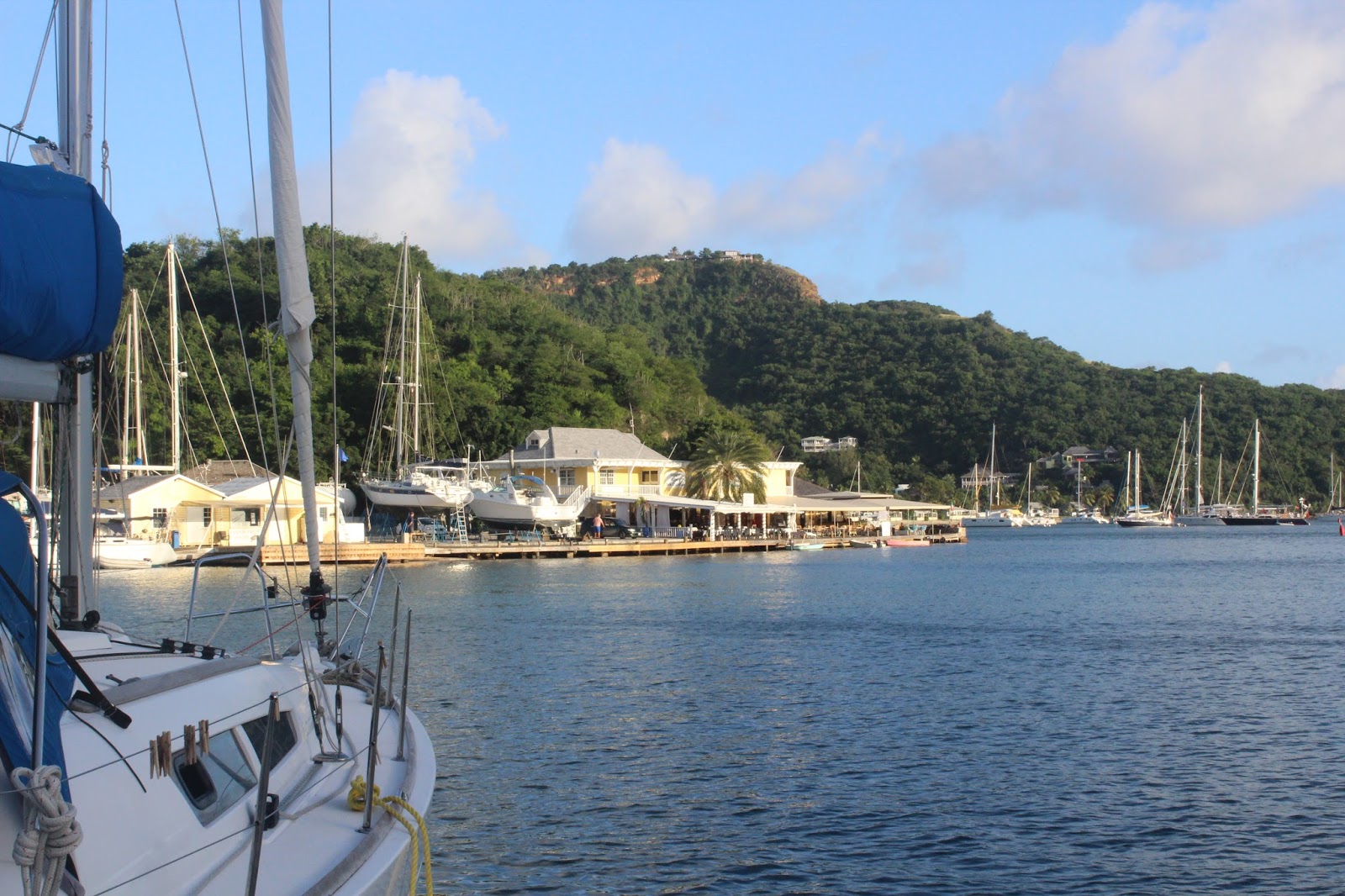
Gordon Lightfoot sang to us of the doomed Edmund Fitzgerald and George Clooney helped share the saga of the ill fated Andrea Gail. There are countless stories of tragedies at sea; sailors lost forever.  While we are on the ocean, we take every precaution to assure our safety in case things go south.  We have a life raft below. We have Personal Locator Beacons attached to life vests and  an EPIRB ..an Emergency Position Indicator and Recovery Beacon…on board, all designed to  signal our position in case of distress. What we do not have is the ability to communicate. For all intents and purposes, every time we shove off  in the deep Caribbean, we are lost at sea.


One of the fascinating things about sailing the Caribbean is that you are experiencing civilization  as it was years ago, particularly as to the world of communication. Cell phone service is sporadic at best and virtually unavailable at sea and the places we stop. One’s phone, that marvel of modern technology, is  relegated to the status of a brick. Internet? Faggetaboutit. If you get it at all, it is in a marina or pay-per-minute  internet shop, where the service is  uber expensive and uber slow.
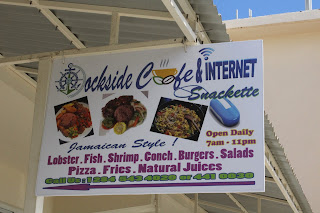
 
I am able to post these entries only when I have the money, time and immense patience. There  is no time for internet browsing or email perusal when you one is sailing. We are on the move constantly. We have to pull anchor when the tide is right and before the front moves in or so that we will get to the next anchorage while the light is still right so that we can avoid the reefs.   So forgive me, all you followers, if you can't reach us  and if these posts are infrequent. Know that we are thinking of you all and that while we may seem lost at sea, we are safe. It turns out that the  world without cell and internet ain't such a bad thing. Perhaps made easier for us by the context in which we don't have it.


The Admiral and the Barkeep


Nelson’s Dockyard is the historical enclave  that was the home of Admiral Horatio Nelson’s royal navy in the 1700’s. The Antiguan government has gone to great lengths to repurpose the buildings for modern use, while preserving their heritage and history.  The admiral himself occupied a building that is now an upscale hotel known as the Admiral’s Inn, and after a hot day exploring the island we sauntered in to its cherry-wood beamed tavern for a late afternoon beverage. It was here that my perception of the cocktail was forever altered.

I am not much of an imbiber, but as an aspiring chef  I appreciate culinary artistry in any form, and in this case the artistry graced  mixology. As I sat at the bar awaiting attention from the bartender, I noticed him creating some of the most meticulously attended and beautifully crafted cocktails I had ever seen.
Reggie

I could not help but to offer commendation to this artist barkeep, and he, Reggie,   graciously responded in his Antiguan-English lilt. “The art of the cocktail” he instructed, “ is not just in combining contents, but in the manner in which they are presented”.  I inquired about one particularly lovely libation that he set on the bar. “A rum punch”, he announced, “ but made in the old fashioned manner”.  The rum punch  which I knew as  familiar fare in these   tropical climes was  artificially colored  imitation fruit juice mixed with cheap rum and a maraschino cherry. Not so under Reggie’s tutelage. His was a production, involving hand pressed lime and layered rums, topped with bitters and nutmeg. Not only was it a work of art, it was the most delicious cocktail I had ever experienced. “Layering rum is vital to the proper rum drink”, Reggie explained. “White is for power, dark is for flavor. Most people do not understand that white rum has higher alcohol content and gives the drink its punch. It is the quality of the dark rum that makes the drink flavorful, and as they have different viscosities, they should be layered so that the customer may enjoy the drink as it unfolds.”  He replicated this philosophy with another Caribbean classic, the  Dark and Stormy. “People pour rum into ginger ale and swirl it around like they are making chocolate milk. The proper Dark and Stormy is cascading sheets of ginger beer rain descending from the  storm clouds  of dark  rum. The drink must give homage to its name”. So it was that Reggie the barkeep at the Admiral’s Inn in Nelson’s Dockyard in English Harbor Antigua has entered the lore of my sailing life, assuming that after my second Old Fashioned, I remember any of it accurately.  
 
Old Fashioned Rum Punch and Dark and Stormy
Reggie's Old Fashioned Rum Punch recipe:
two teaspoons of simple syrup in bottom of manhattan glass
Wash Lime and rinse
Cut 1/2 of lime and hand squeeze gently enough to allow juice into glass, but not so much as to crush and misshapen the lime. Drop the lime into the syrup, cut end facing up
Add high quality white rum
Pour slowly and gently high quality dark rum into the side of the glass so that it does not glop into the white rum
Sprinkle 6 or 8 drops of Angostura Bitters
Sprinkle nutmeg

Sweet and Sour


In the  the late 1700’s the English remained in control of Antigua. Here in English Harbor, a protected cove surrounded by tall hills, Admiral Nelson found the perfect refuge for the English navy and the perfect lookout point.

From high on the hills, he could monitor the Spanish and  French fleets, the pirates and the privateers,  and remain in control of the English trade route. At that time, the trade route consisted of a horrible triangle of human exploitation and suffering. The English would pay conscriptors in Africa to rip people from their homes, stuff them foot to head on slave ships and ship them here, where they would be bought by the sugar plantation owners. The plantation owners were mostly Dutch…why?  Because the Dutch were experts at wind power and it took wind power to run the sugar pressing mills. 
Then the sugar would be processed and sent to England where the wealthy clamored for it to add to their  tea…tea being another slave labor product from the Caribbean. But first the merchant ships would stop off in the Carolinas to pick up the slave labor cotton. While in port, they would sell Caribbean sugar and spices  to the newly liberated United States…until England imposed a tax on any goods being sold to foreign nations, and the U.S.A. now being a foreign nation, the Antiguan sugar barons had to pay tax to sell to the U.S.A. The sugar industry went in the dumps,  the Dutch stopped buying slaves, and  in retribution (not out of some moral imperative) England responded by outlawing slavery in Antigua. In 1834, every resident of Antigua became  a free man, and 85% of the population was a freed slave. They were free but they were starving, because there were few ways to make a living. Christian missionaries descended upon the island to provide education and hope, and the English still owned the island so the Queen had to provide subsidies to keep the island from descending into chaos. The foregoing  is my long winded way of explaining Antigua today. It is a fascinating country. The people are educated, healthy and happy. The country  became independent in 1981, but holds on to both an English sensibility and its  own culture. They are fluent in both  their patois and a sartorial  English. The economy is better than most of the Leewards, but if you are not native Antiguan, good luck getting a job here. They are highly religious. It is not uncommon for them to be singing songs of praise as they go about their business. There is a pride in their tiny country and people take pride in their jobs in a manner  that we have experienced no where else in the Caribbean. In my next post, I will introduce you to one of our favorite examples.
Julianne   January 3rd  

                                              Atop Fort Berkely  English Harbour


Dondelino


Rossella and her son Andrea from Milan invested their life savings in a little corner of English Harbor to create a Spanish/Italian restaurant they named Incanto (“enchantment”). He is a young and beautiful man about 30, speaking perfect English. She speaks very little English but is adorably outgoing and  not afraid to practice on you. The food is delicious and imaginative. They furnished the restaurant with chairs from Italy that have back springs, and with a little prodding you can get the chair back  to give you a gentle rock. You discover this after your second glass of wine and it is luxuriating. Rossella saw me appreciating the chair, davening like a Chasidic jew, and announced…”you like? In my country, when you do this, we say you are ‘dondelino’”  I did not understand the term, but there seemed to me  no American word that could better describe my state of mind at that moment….boat firmly at anchor, belly full of ragu spaetzle ( an amazing pasta that will soon be the craze at home), my head woozy with Malbec, and me gently rocking my Incanto chair  above the waters of beautiful English Harbor. I was indeed, at that moment, dondelino.

December 23rd, 2016

Antigua Bound


The title to this post sounds like we are embarking to Antigua. In fact, the opposite is true. We are already in Antigua. We have been here for days. We are ready to move to other Leeward Islands. There are so many we want to visit. Nature, however,  is disagreeing with our plans.

We are bound to Antigua because of the wind. Most of the year, the Leeward Islands get wind from the south and southeast. These are the warm and pleasant trade winds. But during some random periods in December and January, these islands get what is known as “the Christmas winds”: a placid sounding nomenclature  for stiff blows coming from the east or northeast. The Christmas winds have arrived on our doorstep  like a least favorite relative at the holidays and showing every  sign of overstaying their  welcome. 

To sail to Guadelope and Dominica …we love what we read about these  islands…we would have to sail south  in 8-10 foot seas. Keep in mind that these waves would be hitting us squarely on our port beam (left side). Let me describe the effect:  for 10 hours, we would be trying to hold onto and steer a boat that was swaying viciously from one side to the other, the mast tip scribing a giant semi circle against the heavens like a giant upside down metronome.  If the sea did not kill us, we would probably kill each other from the stress this creates. You can’t eat. You do not want to go below for any reason, including going to bathroom. It’s one thing to being on deck and seeing the waves coming; it’s still another to be tossed about below in the  cabin like a drunken…well..sailor.

So we are Antigua bound. We are slightly frustrated because we have come so far only to be thwarted in our quest for the far frontier. At the same time, we are undaunted. We are appreciative of the beauty of our present anchorage in  English Harbor. We are getting to know the people and the  lay of the land and embarking on new  adventures each day, land based though they be. We are sailors and we pay attention to what the wind tells us. It is telling us to lay low, and we are heeding its warning.

Coming soon:  Lots of Antigua posts.
Julianne   December 26th, 2016


The Slog


Sailing directly into the wind is something sailors hate. First of all, you can’t technically do it. A sailboat cannot sail with the wind directly on its nose. You have to tack, back and forth. So if the wind is from the east, and your destination is directly east, you are in for a long and painful sail. You must head way off course, then head way off course  90 degrees in the opposite direction, and repeat, over and over, hoping that the current is not also on your nose. A 90 mile trip becomes a 150 mile trip if you are likely. A sailboat does 6 or 7 knots, on a good day. You do the math.

Long story short: we got the poopdeck beat out of us on our way to the Leewards. No anchorage was ever more welcome, or  sunset from the cockpit ever more lovely, than in Jolly Harbour Antigua. When my stiff fingers recover from grasping the wheel, I will report further. Meanwhile, to all you paying attention, we love and miss you and wish you the merriest of Christmas. We know ours will be Jolly.

The Deadman and the Dinghy


When you are sail cruising, there are many vital tools essential to the  experience: a spare GPS; a good Swiss Army Knife; a hand held radio, just to name a few. But no tool is more essential than the dinghy.

The places that we cruisers go almost never involve marinas. Aside from the fact that they are far and few between,  and that while there you may procure  more fuel and water for your boat, your boat in a dock is basically  a  box with no breeze and the smell of diesel wafting in. So we opt for the coves and the anchorages and the small unpopulated harbors. These places look beautiful from the boat, but you will never touch that white sand beneath  those swaying palms but for the dinghy. In the Caribbean, on small boats  you typically tow your dinghy. It bounces along behind you like a faithful puppy. You arrive in your cove, you drop anchor, secure the boat, and hop into the dinghy with its little 4 or 5 horsepower outboard, and a few putter putters later  you are at another tropical bar/ grill made out of sticks by some local who is happy to see you and happier still to sell you a roti ( a  Caribbean chicken curry burrito) and a beer. Then you can hike into the hills  and see what mysteries loom beyond.
food shack on Princess Diana beach, Barbuda
 

If the dinghy breaks  you are a prisoner of the boat. Oh sure, you could row it, but that gets old, particularly if  shore is a quarter mile away. Remember, it’s hot, and you have been at sea, and you just want firm footing  and a cold one.

What if you fell out of your dinghy?  What if someone else wanted your dinghy? Bad day either way. Ergo the deadman key: A plastic prong at the business  end of a red rubberized wristlet. It must be clicked into the outboard for it to run.  Forget the deadman key, and you are delayed. Lose the deadman key, you are screwed. Die and fall off the dinghy, well, at least the dinghy won’t get far.

Which is why we are vigilant about the deadman key. The protocol: tie up the dinghy, hand over the deadman key to the crewmate  who is responsible for sticking it into the dinghy bag, which goes with you wherever you travel. (More on the dinghy bag later. There is a lot to dinghy-ism).

Moral: always know where lies the deadman key. At sea, it is the key that unlocks your world. 
P.S. So as not to create confusion with an earlier post:  

Deadman Key
Deadman Cay
 Julianne  December 13th, 2016

Cow Wreck Theory


 For all of the effort it took to make it to Anegada, the payoff was big. This is an island with the strangest of cultures. The people are isolated but friendly,  glad for outside visitors. The economy is based on two things… renting you a scooter and selling you lobster. The lobsters are so big they refer to them as Lobzillas. You select your victim from a pen that is floating at the purveyors dockside and they cook it for you in a half barrel grill with some kind of special and delicious  Anegadian spice. When you are done, you traverse the island  until you find a private beach. This is not an arduous task, because the island is one long sugar sanded circle and there is very little humanity here. Everything is a private beach.

The only company you encounter on these gloriously unscathed beaches is the occasional cow patty. Because on Anegada there seems to be  more cows than people, and they like the beaches too.  We heard about a particular beach called “Cow Wreck Beach” and we embarked in a beat up  rental jeep (driving  left lane on scooters did not appeal to our safety sensibilities) to tour the island and find this mythological place. I anticipated the origin story…a boat full of cows having shipwrecked on a beach and a few hearty survivors cowpaddling their way to shore, their descendants becoming abundant and now populating this island en masse. Turns out the theory was wrong.  A shipwreck in the early 20th century did indirectly involve cow but was not the seed of the cow infestation. In fact, the profligate cowness of this island could not be explained by anyone we talked to.  Given the amazingly unsullied vista, the bizarre name may be the locals way of making this place uninviting to non-cows.
So we just enjoyed a cold one as we deliberated on how  the Cow Wreck Beach Bar and Grille could survive, given that it is an impossible Bar to get to on an island that is impossible to get to, and given that  it appeared that only we and the cows had frequented it in the recent past.   Since Joe speaks fluent Cow, he mooed out the window to the bovine residents as we made our way home, thanking them for sharing their slice of paradise, stopping at a fisherman's lair  to procure a lobzilla for another day.
Julianne   December 9th, 2016

Buried Treasure


Recently we anchored in the Bight, the harbor of Norman Island. Norman Island is sometimes referred to as “treasure island”,  less owing to its marked resemblance to Robert Louis Stevenson’s famous setting as to its actual history.  In August 1750, the crew of a Spanish treasure galleon named Nuestra Señora de Guadalupe mutinied and the ship’s  treasure, said to include  55 chests of silver coins, was buried on Norman, some of it having been found over the years.  It is buried  treasure that holds the allure of the sailing life, though not of the shiny dubloon nature,  and to find it requires a certain temperament.

Patience is fundamental to sailing. A sailboat moves slowly, even when it is moving fast. There is not enough room for two people to change their clothes at the same time. You have to tolerate each other’s  idiosyncracies because you are crammed  together. Alot. 

The Caribbean operates at a different pace. Everything happens on Island Time. Meaning: slowly. No one is in a hurry. Checking out groceries can take a half  hour.  You can finish half a novel waiting for the laundry lady to finish your clothes.   In America, riots would break out if things operated at this pace. So you learn to be patient. Things will happen when they happen, and not a minute before.

You have to be organized. There is so little space, that everything has a place and it has to be put back exactly in that space as soon as you are done with it.

You have to pay attention to rules. Things must be done meticulously and in a particular order, or something bad will happen. If you do not turn off the nonessential powered items at night, you will awake without power. If you do not rinse briefly , then turn off the water while you lather up, then rinse briefly again, you will run out of water. If you do not hand up things from the dinghy with two hands and grasp them with two hands, they will be lost to the proverbial drink. Rules are everything.

Many people would find this lifestyle intolerable. You are hot and sticky and mosquito bitten and there is always a stubbed toe or banged finger or swimmer’s ear. Those of us who look past those things and love this life, do so because of the remarkable rewards. You wake up and study the barometer and the tides  and wind  and then choose a new and unexplored destination. Then, if you have been patient, stayed organized and followed the rules, you get to sail off and discover rare corners of this planet. It is those that are for us,  the true buried treasure.

Foxy and Free at Last


Ask any seasoned sailor about the most famous tropical bars in the Caribbean, and they will invariably mention a watering hole on the water  known as “Foxy’s”.

As you approach the island of Jost Van Dyke, in the Caribbean Sea north of Tortola, you are seeing a jungle enshrouded tip of a once volcanic mountain rising from the sea.
It  appears to be without human presence until you settle yourself in Great Harbour where you note a few scant shacks along the shorefront. Tucked into a corner on the east, at the end of a rickety dock, is Foxy’s.
It is a blue roofed, open air structure, dogeared and weather beaten, with a few tables and a small inconspicuous  bar.  It is nondescript except for the fact that every square inch of the ramshackle structure is adorned with license plates; plates from every conceivable corner of our planet where vehicles must register.

When Foxy Caldwell first opened his then lemonade stand sized establishment, he could not have foretold what was to come. He would not know that the Beach Boys, the Jimmy Buffetts and the Kenny Chesneys of the world would make this place famous;  a virtual pilgrimage. A place where New Years eve rivals Times Square. The attraction, it seems to me, is its remoteness; if you are imbibing at Foxys, you are doing so only after considerable time, expense and effort. You are celebrating not only the fact that this is Foxy’s, but celebrating yourself for accomplishing the nearly impossible in getting here.

Which is why, four years ago, with my son Evan at my side, I proudly and ceremoniously added my license plate “FRE8LAS” to a predominant position on the seagrape gnarled front gable of the entrance to Foxys. It was, for a sailor like me, a rite of passage.

Which is also why, upon returning to Jost yesterday, Joe and I were astounded and excited to see FRE8LAS hanging at Foxys, just where we left it. Dingier and rustier, but there nonetheless. I imagined all the sailors who took a rum sotted tour of the licenses over these last four years, and who seeing my plate, might have pondered the backstory of this anonymous sailor who was, for  probably some  wonderful reason, free at last.
 
December 5th, 2016

Anegada Tell You (This Was Some Entry)


There is a tiny island in the Caribbean named Anegada. Until a few years back, it was virtually impossible for any but the most seasoned of sailors to get a boat to it. It is literally in inches of water and surrounded by an expansive reef.
Now there is a version of a channel…a couple of red markers giving you a modicum of guidance on how to bring in your boat and not tear it to tatters. Still, you must attempt entry to Anegada only in the sharpest and highest of sunlight. It is the only way to see the variant colors of the water…turquoise or white marking sand underneath;  darker shades heralding coral head danger. I have now sailed the Virgin Islands four times, never having conjured the courage to venture off to Anegada, some 20 miles distant.

While crew enjoyed early morning coffee in the cockpit as the sun awoke over North Sound in Virgin Gorda, I was contemplative, pondering the many factors that I would have to monitor to make for a safe passage to Anegada. Knowing light was going to be one of those factors, I anxiously cajoled the crew to complete their predeparture preparations.

The trip was uneventful and mellowing, the  Virgin Islands disappearing off our stern. We sailed  under a  sky blue and cloudless, the light wind in our sails both gratifying in their  calm but at the same time,  exasperating,  given  my present need for speed.  We turned the bend around our final GPS waypoint and began to snake through the minimal and unhelpful buoys  marking an illusory path into safe waters near Anegada . Our boat drew 7 feet, meaning our keel would hit bottom if the ocean gave us less.  We could see only sporadic light patches of water. The depth meter alarm was screaming at me. We gingerly made our way into a pack of boats, mostly catamarans. This  was not at all  comforting, as catamarans draw 2 feet at best. As we approached a mooring ball, the depth meter read 0.2…2 inches of water separating the bottom of my keel from the top of something hard. I advised the crew to brace for impact. Before that could happen, Joe adeptly snagged the mooring pendant and tied us on to it. “Boat Secure”, he yelled , as is protocol. We all stand frozen and silent, not believing that we have actually, and finally,  made it to Anegada.
As you will see in posts to come, we were glad we did.

Julianne  December 4th, 2016


Flaming Bazooka


Many  American visitors to the United States Virgin Islands who deign to  visit the British Virgin Islands, do so  by making a  day trip  by ferry from St. Thomas. They arrive with camera and beach tote. Which is why  Joe and I, disembarking from the ferry with 300 pounds of gear,  were detained by BVI customs for over an hour.

When 4 duffels of sailing and diving gear, an eight foot long fishing pole case and monster backpacks containing film equipment unloaded with us, it  inspired furrowed brows from the customs receptionist. If the 300 pounds of gear had not sufficiently jangled nerves, our stupid answers on our Immigration Admittance Forms were surely the clincher. "Filmmakers" we listed as our occupation, in our zeal to be cute and to embrace our hopeful  retirement from our recent vocations.  Apparently, the BVI tourist board does not appreciate uninvited film crews arriving on their sacred domain. It probably should not come as a surprise, given that  the byline on the BVI license plate reads:  "natures best kept secret". We were locked in a cabinet while customs tried to track down a Cultural Minister so he could personally question our motives.
 Compounding our problem was our failure to pay attention to the form requirement that you list your birthdate European style, i.e date/month/year. This caused even more consternation and confusion than our alleged covert film ops, and we were forced to legibly redo the forms under the stern gaze of the customs agent, admonishing us repeatedly to use  proper British date syntax.

We were then directed to Immigration for bag inspection where we were required to open and explain each bag...except for the eight foot long cylindrical black plastic case. The  one  that could easily be mistaken for a  rocket launcher, particularly given that the logo emblazoned on the side translates as  "Flaming Bazooka". That one they were not concerned about. 


"Bazuka Pro Flambeau"
 
Julianne   November 16th, 2016
 

Naked Boating


Caught your prurient eye, did I?

Well simmer down. Today I write about the realm of bareboat chartering. Contrary to what the name might imply, it simply means chartering a sailboat without a captain. It has nothing to do with boating au natural.  To the uninitiated, I suppose chartering a captained sailboat and letting someone else run the show might be interesting. I would counter, however, that paying for a captain takes all the fun out of it. After all, what could be more exciting than  taking temporary possession of someone else’s quarter million dollar piece of machinery, and, never having operated it a day in your life, sailing it out into the middle of the ocean and hoping that you will figure out how the thing works  before you kill yourselves?

We have been on many boats and gone to many a strange territory, and so far have emerged unscathed, other than becoming addicted to the game itself. Each boat has its cool features and its peccadillos. There is no such thing as the perfect boat. We have figured out what makes for a successful bareboat cruise, and we shop our boats carefully, but there is always that shaking -off- the- rust period, and a healthy dose of McGivering—having to jury rig when things don’t go as planned. My Joe can look at something mechanical and pretty much figure out why it is not doing what it is supposed to do. You cannot sail if you do not have a Joe on board.

Today we  motored out of our home port marina  on the southeast of Tortola, pointed into the wind and tried to raise the mainsail. That was after trying  to figure out the multiple erroneously marked  lines (“sheets”, we sailors call ‘em).
We isolated the main sheet and pulled and tugged. Nothing happened.    We didn’t panic.... Been there, seen that problem.  We knew something was hanging  up the mainsail, and after a few minutes saw that the sail battens were getting stuck on a spar high on the mast. Joe whipped and lassooed (“hee haw!!) the line until it snapped free. Then we could move on to our favorite moment...when you know the wind is in the sails and you can shut down that damn motor and the only sound is the whoosh of wind and wave. The boat soars and you are free and the world around you is beautiful and the sun is warm and the ocean is blue and grand and some new, undiscovered adventure lies ahead.  And that, my friend, is why we bareboat.

Oh, and for the record , there is in fact occasional nudity.
 
Julianne 
 November 25, 2016
 Bolongo Beach, Tortola  5:47 PM  November 18th, 2016

Paradise Oxymoron


When we tell people that  we are sailing to remote tropical places, they tell us they envision palm tree lined, white sand beaches with thatched huts and a beautiful tropical forest leading away from the beach. We do not want to seem smug, so we feign that such places are only in postcards. We are lying.

Deadman’s Cay lies on the northern shore of Peter Island, about 5 miles south of Tortola. I have now returned to it for the third time, because I consider it to be a  place of such stunning beauty that after I leave it I feel I must be remembering it incorrectly. As we steered in to the bay , I was once again struck by a setting that seems to me from  a movie set; a place that simply cannot exist in real life. I  share pictures with you here, but they truly do not do it justice.

That a place of such ethereal splendor should have such a foreboding name makes it that much more special.
 It faces another tiny  island, about ½ mile away, that is known as Dead Chest Cay. It is allegedly the island where Blackbeard marooned 15 of his men who had threatened mutiny, leaving them with naught but  a bottle of rum. Folklore has it the some of the stranded attempted to swim to Peter Island and did not make it, thus the incongruous moniker “Deadman’s Bay”.   

On another note, the sheer cliff of Dead Chest Cay  when viewed from the Peter Island beach appears to be a man in a coffin. In the 1700’s a  coffin was known as a “dead man’s chest”. Hence the ditty “fifteen men on a dead man’s chest, yo ho ho and a bottle of rum.”

More on Peter Island in later posts.

Julianne  November 26th, 2016


Fingers in the Air!

We are often asked   "So where are you going and when will you be there?  


The reality is the answer is we do not have a clue. This is not a cruise on a superliner.  We are on a small sailboat. So each morning, we have to get up, get the weather report, look at the water and waves, figure out how far away we are from we are to where the boat has to be on the last day, pour our coffee, look at the charts, and caucus with the crew. So instead of answering the question, I usually lick a finger, stick in the air and shrug.  It seems to impart the message.  

We are at the mercy of the wind and waves. That is what makes sailboat cruising vacations so much fun. You literally do not know how the adventure will play out, and where the winds will take you.